Across SAT-7’s programs, stories of faith in the midst of hardship are shared across the Middle...


SAT-7 is giving a voice to those who are often silenced across the Middle East and North Africa (MENA) – women who face domestic violence.
“He chased me with a big kitchen knife.”
“He grabbed me by the hair.”
“He yells and hits me.”
These brutal accounts are among the stories we heard. Each woman shared her story as part of a SAT-7 initiative: workshops on domestic violence held in crowded, low-income districts on the outskirts of Cairo that are home to many Coptic Christian families and Sudanese refugees.
In Egypt, where domestic violence affects 31 percent of women, social pressures, economic hardship and even restrictive religious attitudes keep many trapped in silence.1 The workshops – held as part of SAT-7’s Gender Equality and Freedom of Religion or Belief (FoRB) project – marked a rare and vital breakthrough, creating safe spaces where faith and healing could finally meet.
“What we are trying to do is to normalize speaking up about and speaking out against gender-based violence,” said Project Lead Maggie Morgan. “By being a platform for these usually hushed voices, we hope to see a change happen.”
The initiative was prompted by the response to an episode of the project’s flagship program Today Not Tomorrow on domestic violence.
“The episode covered the story of a woman who was beaten to death by her husband, and the church leaders had not supported her to leave him,” Maggie explained. “When the Viewer Support Team told us that the responses and requests to talk about domestic violence were coming from two specific areas, we thought it would be a good idea to collaborate with the church there and hold these workshops.”
The sessions ran for several weeks over the summer, covering issues around self-worth as well as domestic violence. They were attended by 150 women; able, for the first time, to share their suffering and find support in community.
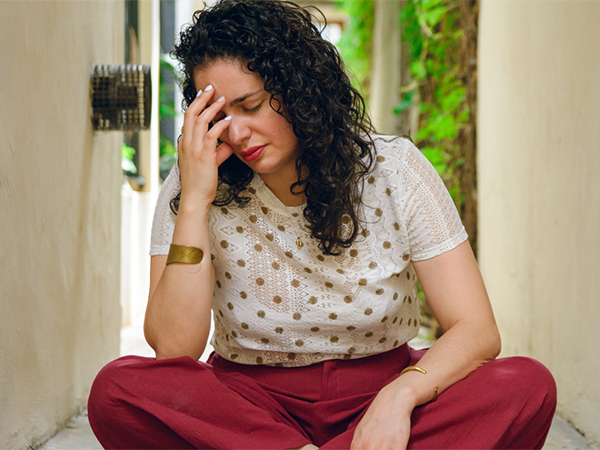
In Egypt, where domestic violence affects 31 percent of women, social pressures, economic hardship and even restrictive religious attitudes keep many trapped in silence.
Some church leaders hesitate to confront domestic abuse, seeing it as a private matter. “I told the priest about my problem,” said one of the workshop participants who had reached out to her church leader. “He said, ‘Be patient, this is your cross to bear.’ But why didn’t he say, ‘Bring him and let’s sit and talk, [and] tell him what he’s doing wrong?’”
Nagwa Samy, the professional therapist who led the workshops, said, “The idea that a woman must accept violence because it’s her cross: I completely disagree with that. Christ carried His cross willingly and for a purpose. There’s no reason for any woman to keep enduring humiliation and beating at home. That’s violence; that’s serious harm to her mental health.”
Thankfully, local Coptic priest Father Girgis was also concerned about the issue of domestic violence in the community. “Violence is increasing all over the world,” he explains, “and it increases even more in poorer areas because of economic pressures.”
Father Girgis’ support was wholehearted and vital to the workshops, which were held at the church building. And as women began to share their stories and receive understanding and guidance, the first quiet signs of change have begun in Cairo.
Across the MENA region, gender-based violence remains widespread, with one in three women estimated to have experienced physical or sexual abuse.2 Through television, digital media, and community outreach, the Gender Equality and FoRB project is working to change that.
As well as highlighting the issues women experience, the project also engages men, recognizing the pressures they face and inviting them to be partners in change.
“The question that we ask is: what is the problem? What is the symptom? And we want to go to that area; we want to say: where does it hurt? And we go there,” Maggie said. “But with the focus on freedom of religion and belief, what we’re trying to do is go to the source and find out why these symptoms are happening. And one of the things that we try very hard to do is to change the narrative, the way we think.”
SAT-7 has also brought awareness to this issue through other powerful broadcasts, including a podcast sharing the story of a Syrian woman’s journey from abuse to recovery, and a SAT-7 TÜRK Homemade episode featuring expert guests and street interviews on violence against women.
And, through one-on-one conversations, each of SAT-7’s Viewer Support Teams respond to women across the region. Women such as Asal in Iran, who told us: “My husband had been mistreating me, beating me, and drinking.”
And Amar in Algeria, who said, “I suffered a lot with [my husband] always beating me without reason. Beating and scolding women is part of manhood in our society.”
Like those in the Egyptian workshops, these women have found solace in the knowledge that they are not alone; that their pain is seen, their stories matter, and help is at hand. SAT-7 is creating safe spaces, sparking dialogue, and challenging the attitudes that keep abuse hidden. And in Cairo’s churches, as in countless homes across the region, hope is finally finding its voice.
Sources
1 Egyptian Center for Women’s Rights (ECWR)
2 Organization for Economic Cooperation and Development (OECD)

In 2024, at least 81% of your gift went directly to fund programs building up women, children, and families across the Middle East.
Login to your ministry partner self-service account.